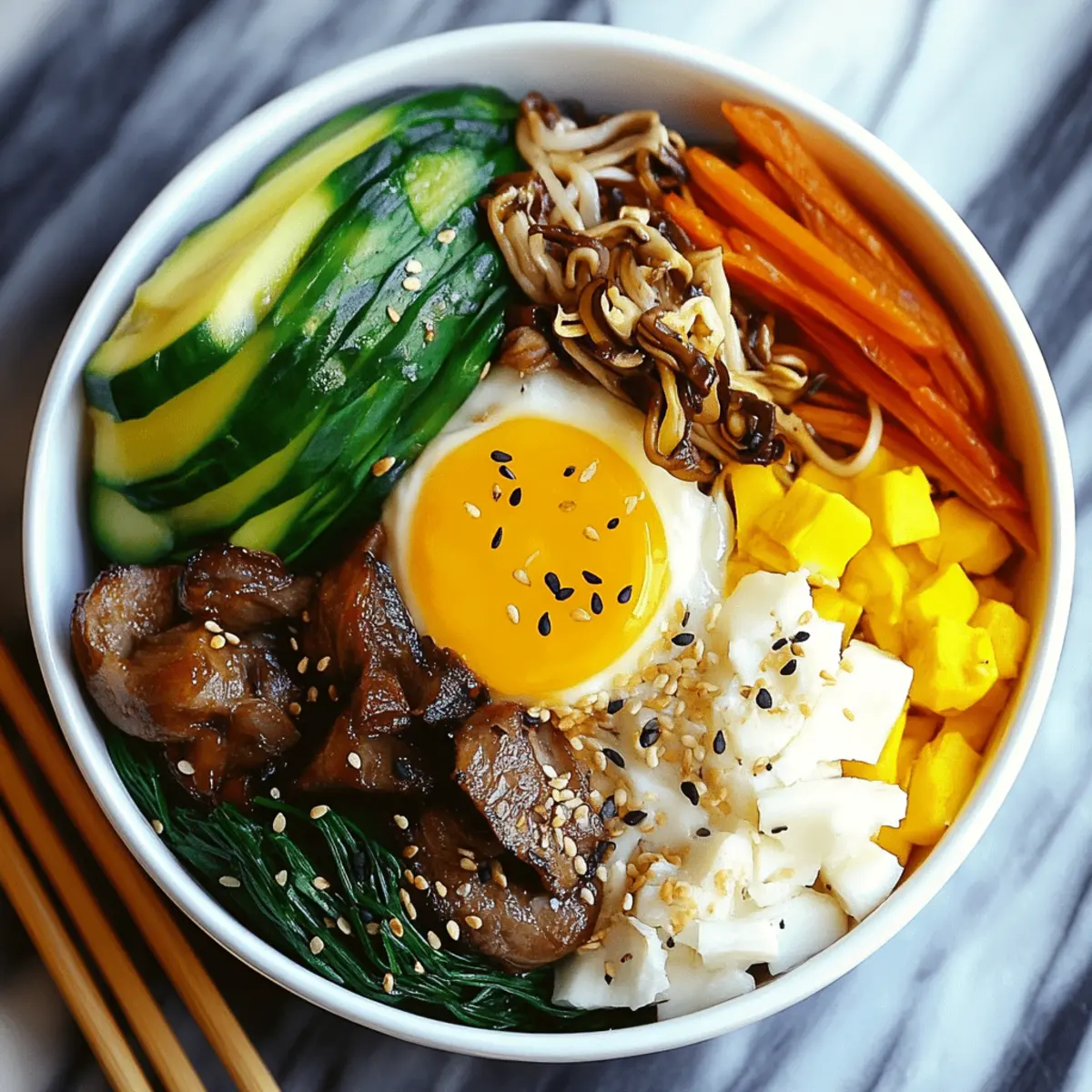
Korean Bibimbap Bowl
450kcal
Ingredients
For the Rice Base
- 2 cups cooked rice This serves as the hearty foundation for your bibimbap.
For the Vegetables
- 1 cup spinach (blanched) Adds a nutritious green element.
- 1 cup carrots (julienned) Provides sweetness and crunch.
- 1 cup zucchini (julienned) Its mild flavor complements the dish.
- 1 cup mushrooms (shiitake or button, sliced) Brings umami richness.
- 1 cup bean sprouts (blanched) Adds a fresh texture.
For the Protein
- 1 cup sliced beef (or tofu for a vegetarian option) Choose beef for a meaty touch or tofu for a vegetarian delight.
For the Eggs
- 4 eggs Fry these sunny-side-up for richness.
For Cooking
- 2 tablespoons vegetable oil Used for sautéing the vegetables.
For Drizzling
- sesame oil A flavorful drizzle enhances taste.
- sesame seeds Sprinkle for crunch.
For the Sauce
- 3 tablespoons gochujang This spicy paste is key.
- 1 tablespoon sesame oil Adds depth to the sauce.
- 1 tablespoon sugar Balances the spiciness.
- 1 tablespoon rice vinegar Provides a tangy kick.
- 1 teaspoon minced garlic Infuses aromatic goodness.
- 1 teaspoon soy sauce Enhances the overall taste.
Method
How to Make Korean Bibimbap Bowl
- In a small bowl, whisk together the gochujang, sesame oil, sugar, rice vinegar, minced garlic, and soy sauce until smooth. Set aside.
- In a skillet, heat 1 tablespoon of vegetable oil over medium heat. Sauté the carrots and zucchini for about 3–4 minutes until tender. Season with salt and pepper, then remove and set aside.
- In the same skillet, add another tablespoon of oil and sauté the sliced mushrooms until golden brown, about 3–4 minutes. Season lightly with salt and pepper.
- Cook the sliced beef in the skillet until browned and cooked through, about 4–5 minutes. For tofu, sauté until golden on all sides.
- In a separate pan, fry the eggs sunny-side up or to your desired doneness.
- In individual serving bowls, place a generous scoop of the cooked rice at the bottom.
- Arrange the sautéed vegetables and cooked beef or tofu on top of the rice.
- Gently place a fried egg on top of the vegetable layer.
- Drizzle the gochujang sauce over the top, followed by a sprinkle of sesame seeds and a drizzle of sesame oil.
- Serve immediately, inviting everyone to mix their bibimbap together for an explosion of flavors.
Nutrition
Serving1bowlCalories450kcalCarbohydrates60gProtein25gFat15gSaturated Fat3gPolyunsaturated Fat2gMonounsaturated Fat8gCholesterol210mgSodium800mgPotassium600mgFiber5gSugar5gVitamin A700IUVitamin C20mgCalcium70mgIron3mg
Notes
Blanch the spinach and bean sprouts to retain vibrant colors. Avoid overcrowding the skillet while sautéing vegetables. Marinate beef or tofu for added flavor. Fry eggs over medium heat for a perfect runny yolk.